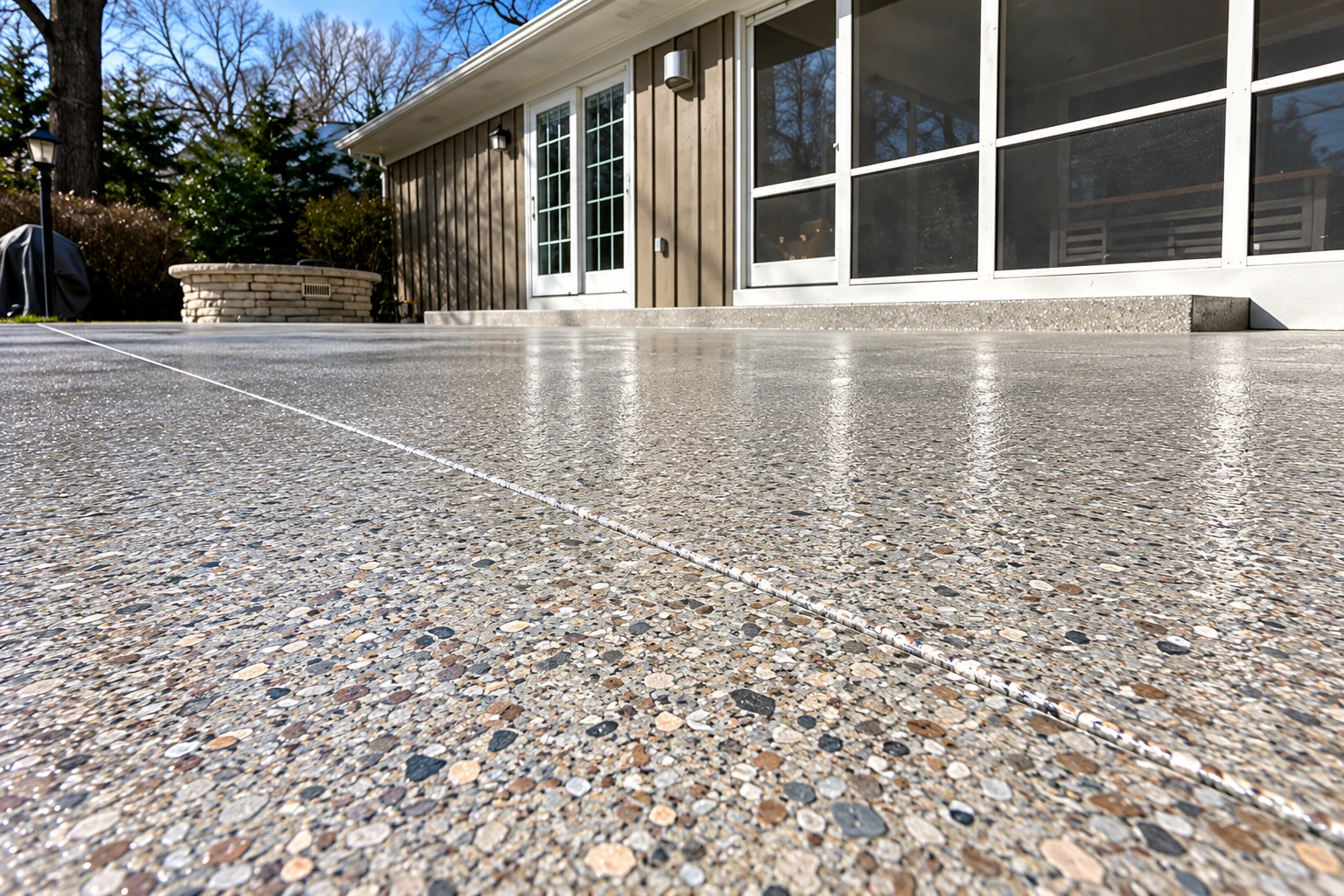
I start by measuring the space and looking at where water runs now, and I tell you then that any slab will get a few cracks, so we can plan where they'll go. Our crew digs out the soft topsoil and roots first, which is part of the price and not an extra, then packs the subgrade, the ground the slab rests on, so it's firm before any concrete goes down. We set the forms with a gentle fall away from your house, tie in rebar, the steel that holds the slab together if it does crack, when your job calls for it, and pour early in the day so the top doesn't dry out before it's finished. After a broom finish, a light texture that gives your feet some grip, we cut control joints, shallow grooves that give cracks a straight line to follow, and then leave it to cure, the wait while the concrete gains strength before you load it up. If the budget gets tight, I'll steer you to a plainer finish before I'll skimp on the base, because the base is the one part you can't fix after the pour.
Patios often tie into other work around the house. If you'd like the look of stone or tile without laying pavers, our stamped concrete services press a pattern and color into the surface while it's still soft. If you need a path from the patio to the side gate or driveway, our concrete sidewalk building work can go in at the same time, so the walk and the patio meet at the same height.
Plain broom-finish patio
This suits most backyards with a table, a grill and some chairs, because it's the simplest finish to pour and the easiest on the budget. It's the one I'd point you to if money is tight, since more of it goes into the ground underneath.
Stamped or colored patio
This suits a patio that's the main view from the house, since a pattern and color pressed into the wet concrete can look like stone, tile or brick. It costs more and the crew has to work quickly while the surface is soft, so we plan it with you and keep the base work exactly the same.