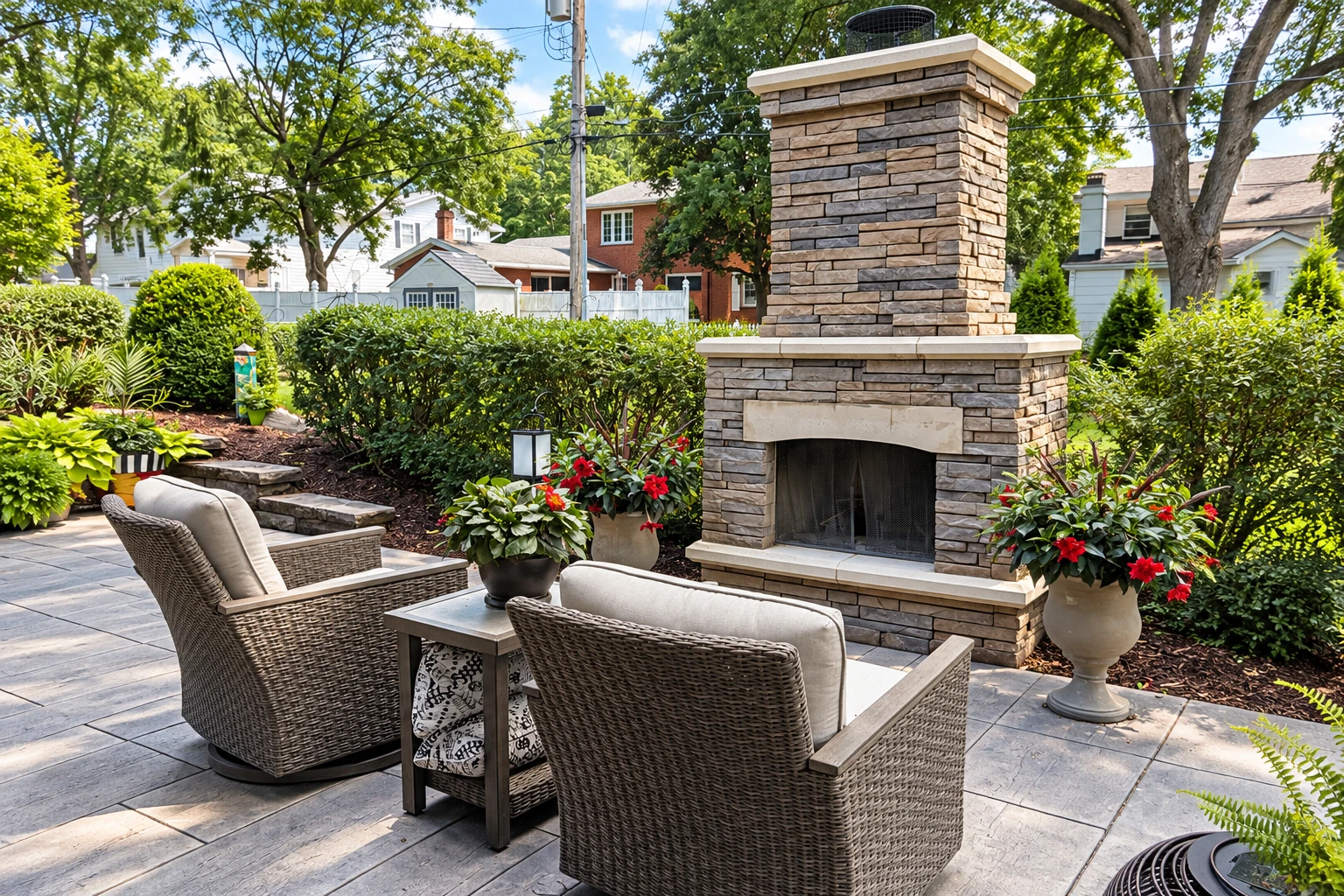
We start underneath, because stamped concrete is still flatwork, a flat slab like any patio or drive, and it settles with whatever it sits on. Our crew digs out and packs the subgrade, the ground the slab rests on, then sets the forms and lays rebar, the steel inside that holds the slab together, sized to how you'll use it and poured to the right thickness for that use. We pour, add the color, press the pattern mats in while the concrete is still soft and cut the control joints, planned grooves that give cracks a place to go, right along the pattern's lines so they disappear into the design. Then the slab cures, the slow wait while it gains strength, and we seal it. If the budget gets tight, I'll steer you to a simpler pattern before I'll skimp on the base, because nobody sees the base on day one but everybody sees a slab that sinks.
Stamped work usually ties into the rest of the property. A stamped patio often meets a path to the gate or the front door, and we can pour a plain concrete sidewalk or carry the pattern along it so the two read as one. Inside the garage we usually leave the slab smooth, because a pattern is hard to sweep and roll a jack across, so we treat that as its own garage floor concrete job.
Integral color for patios and walks
Integral color mixes the pigment all the way through the concrete, so if a corner chips or gets saw cut, it shows the same color as the top. It suits a patio or walk you want to age without pale scars, though it won't give you the deepest or brightest tones.
Color hardener for driveways
One field guide calls color hardener the common pick for driveways and anything that takes traffic, because it forms a harder skin on top. The trade-off is that the color lives in that top layer, so a deep gouge shows the gray concrete underneath.